PDF guide • optimized for mobile • link sent instantly to your email
Couldn't load pickup availability
A self-guided way to explore London and take better photos while you travel.
London gives you too much. Landmarks, streets, views, details — everything feels worth shooting, and that’s exactly why most people end up with nothing. Most shots fall apart not because there’s nothing to photograph, but because there’s no clear decision on what actually matters in the frame.
This guide fixes that by giving you a clear way to simplify the scene. We show you what to focus on, what to ignore and where to look for frames that actually work, so your subject doesn’t get lost in the noise. Instead of reacting to everything around you, you start making deliberate choices and building images that feel structured and complete.
You get a complete, ready-to-follow route through the city, with selected spots, clear timing and simple camera guidance for each location. Everything is designed to be used on the go, so you can open it on your phone and follow it step by step while exploring.
This guide takes you through a set of locations that allow you to understand those differences and adapt to them..You’ll learn how to approach each scene with intention and build stronger compositions in real conditions.
Riverside Photo Walk
The View from The Shard
Barbican Centre
This guide moves through the city step by step — from street-level shooting to elevated views and controlled composition.
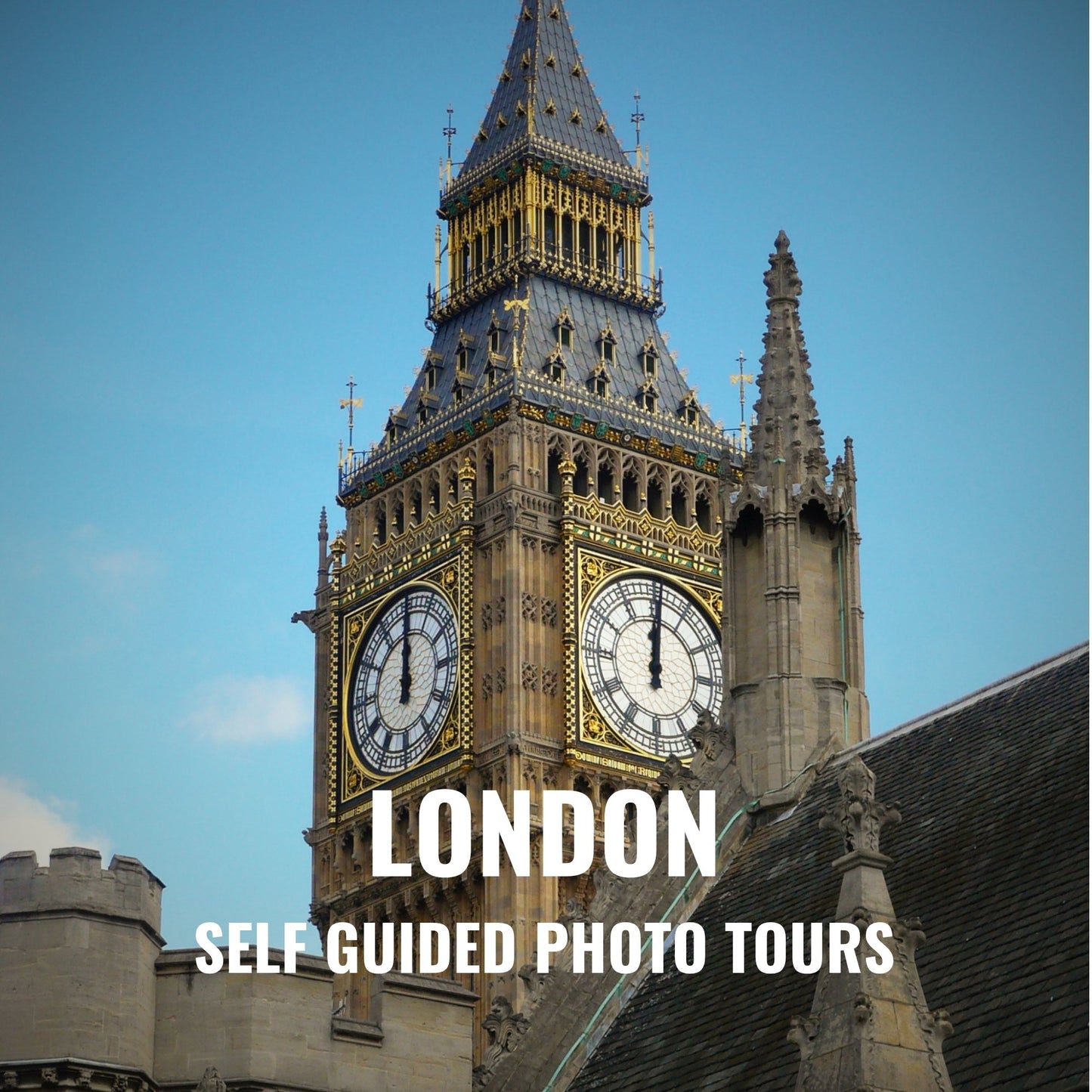
It begins with a full photo walk along the river — starting at Big Ben, moving past Temple Church and St Paul’s Cathedral, and finishing at Tower Bridge, where golden and blue hour bring reflections, long exposures and low light into play. Along the way, you work with a mix of architecture and street life, learning how to adapt as the scene constantly changes.
At The View from The Shard, everything shifts to perspective — shooting the city from above at golden and blue hour, working with reflections, skyline and light, while also learning how to frame what’s happening below.
At the Barbican, the focus becomes more controlled — bold brutalist structures, heavy lines and strong geometry create an environment where composition is clear and intentional, making it one of the best places in London to truly understand framing.
+
20+ pages of step-by-step guidance you can use on the spot
3 complete photo locations in the city, including a full photo walk
Exact shooting locations with direct Google Maps links
Timing for each spot, based on how the light actually behaves
Camera settings tailored to real conditions you’ll be shooting in
“Behind the shot” breakdowns showing how key images were made
Shot to chase
London Bridge Station from The Shard - Most shots here blow out highlights.
Dial exposure down and control the brightest areas first. The metal surfaces reflect more light than expected, so protecting highlights keeps the structure readable and clean.
Full setup is in the guide.
Details
What you'll learn here
This guide focuses on real shooting situations you’ll face on location. You’ll learn how to deal with flat and diffused light across London, how to build clean compositions in busy urban environments along the Riverside walk, how to control exposure and direction from The Shard, and how to break down and construct strong architectural frames in Barbican. The goal is to help you make better decisions in real conditions, not to teach theory.
Suggested gear
This tour is designed for cameras with manual control (PASM modes).You’ll get the most out of it using a mirrorless or DSLR, especially in low light and more demanding conditions.
A smartphone can still be used for some scenes, but it will limit your control and final results.
If you want to fully follow the guide and achieve the intended shots, a camera is strongly recommended.
How the tour works
After purchase, you get instant access to the full guide with all locations, maps and step-by-step shooting instructions.
You can start anytime and move at your own pace - there’s no schedule, no groups and no time limits.
Just follow the directions, go to each spot and shoot based on the guidance provided.
Choosing a selection results in a full page refresh.